
Online Endoscopy Course
✔ Official Certificate
✔ 12 Months Full Online Access
✔ Led by Experienced Medical Professionals
500,00 €
Secure payment • Instant access after enrollment

Overview
What you will learn
- Core principles of Biportal Endoscopy
- Instrumentation and operating room setup
- Step-by-step surgical techniques
- Advanced decompression approaches
- Management of complications and pitfalls
Modules
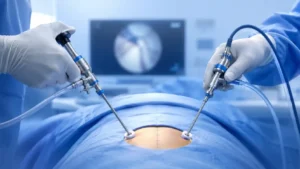
Foundations of Biportal Endoscopy
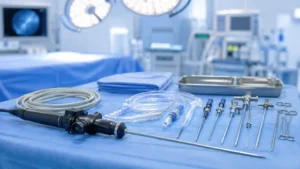
Instrumentation and OR Setup
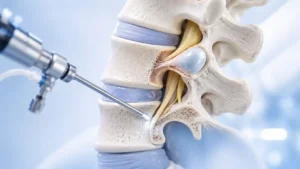
Endoscopic Spine Anatomy
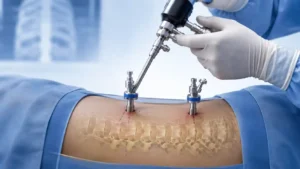
Portal Placement & Docking
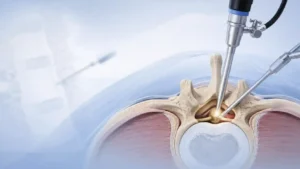
Basic Interlaminar Techniques
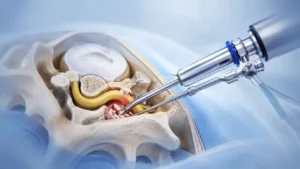
Advanced Decompression Techniques
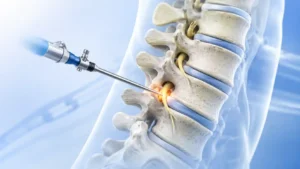
Foraminal & Extraforaminal Approaches
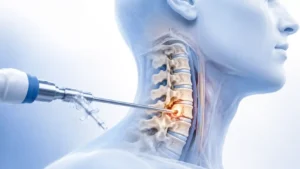
Cervical Endoscopic Techniques
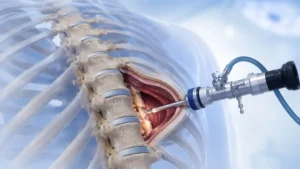
Thoracic Endoscopic Techniques
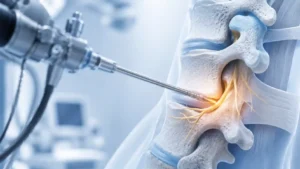
Complications & Pitfall
Surgical Video Library
Basic Techniques
Skin Incision, Portal Creation and Initial Docking
Fundamental principles of portal placement, docking strategies, and establishment of the working corridor.
Standard Ipsilateral Interlaminar Approach
Step-by-step demonstration of the basic interlaminar approach, including exposure, bone work, and neural decompression.
Intermediate Techniques
Interlaminar Decompression for Central Canal Stenosis
Structured workflow for central canal decompression, including ligamentum flavum management and bilateral decompression principles.
Contralateral Sublaminar ("Under the Cave") Approach
Advanced decompression technique for lateral recess and foraminal pathology while preserving facet joint integrity.
Foraminal and Extraforaminal Decompression
Step-by-step technique for decompression of the exiting nerve root through lateral biportal approaches.
Advanced Techniques
Thoracic Endoscopic Decompression
Technical considerations, surgical anatomy, and decompression strategies in thoracic spinal pathology.
Posterior Cervical Foraminotomy
Endoscopic decompression of cervical radiculopathy through a motion-preserving posterior approach.
Cervical Laminectomy
Biportal endoscopic cervical central canal decompression with emphasis on safe neural handling and adequate decompression.
Cervical Laminoplasty
Step-by-step demonstration of cervical laminoplasty techniques performed through a biportal endoscopic approach.
Expert Corner
Surgical Pearls, Pitfalls and Complication Avoidance
Collection of expert tips, common technical errors, troubleshooting strategies, and real-world lessons learned from experienced endoscopic surgeons.
The ESUBE Diploma in Unilateral Biportal Endoscopy is designed for spine surgeons seeking a structured and comprehensive pathway to acquire, develop, or advance their expertise in biportal endoscopic spine surgery.
This program is particularly suited for:
- Orthopaedic Spine Surgeons: Interested in incorporating UBE into their clinical practice.
- Neurosurgeons: With a dedicated spinal practice seeking to expand their minimally invasive surgical skills.
- Surgeons in the early stages of their UBE learning curve: Who require a standardized educational framework before performing independent procedures.
- Experienced endoscopic surgeons: Aiming to refine their techniques and expand their indications to advanced lumbar, cervical, thoracic, and fusion procedures.
- Spine surgery fellows and senior residents: With a strong interest in minimally invasive and endoscopic spine surgery.
- Surgeons transitioning from microscopic or tubular techniques: Who wish to adopt biportal endoscopy in a safe and systematic manner.
- International spine surgeons: Seeking training aligned with ESUBE standards and contemporary evidence-based practice.
Participants should possess a solid understanding of spinal pathology, spinal anatomy, and conventional spinal surgical techniques.
Previous experience in spine surgery is strongly recommended; however, prior experience in endoscopic surgery is not mandatory.
The curriculum is structured to accommodate participants ranging from beginners with no prior UBE experience to experienced endoscopic surgeons pursuing advanced applications and mastery of complex procedures.
The modular design allows progressive learning from fundamental principles to advanced cervical, thoracic, and fusion techniques.
Upon completion of the ESUBE Diploma in Unilateral Biportal Endoscopy, participants will be able to:
- Understand the fundamental principles of Unilateral Biportal Endoscopy (UBE), including equipment, operating room setup, fluid management, instrumentation, ergonomics, and surgical workflow.
- Develop a comprehensive knowledge of spinal anatomy as viewed through the endoscope, identifying key anatomical landmarks relevant to lumbar, cervical, and thoracic procedures.
- Recognize the indications, contraindications, advantages, and limitations of UBE, allowing appropriate patient selection and surgical planning.
- Master the step-by-step surgical techniques for endoscopic decompression, including interlaminar, contralateral, translaminar, foraminal, extraforaminal, and cervical approaches.
- Interpret preoperative imaging and correlate radiological findings with clinical presentation, facilitating accurate decision-making and approach selection.
- Perform safe bone and soft tissue decompression techniques, while preserving stability and minimizing neural manipulation.
- Identify and manage intraoperative challenges and complications, including dural tears, bleeding, inadequate decompression, fluid-related issues, and postoperative complications.
- Understand the principles and technical aspects of endoscopic fusion procedures, including indications, surgical planning, and procedural steps.
- Apply evidence-based concepts in spinal endoscopy, critically evaluating current literature and integrating best practices into daily clinical practice.
- Develop the knowledge and confidence required to progress safely through the learning curve of UBE, from basic decompression procedures to advanced cervical, thoracic, and fusion techniques.
- Demonstrate readiness for supervised clinical practice, through successful completion of theoretical assessments, case discussions, surgical video analysis, and practical training modules.
The ESUBE Online Diploma has been designed as a comprehensive educational pathway covering the full spectrum of Unilateral Biportal Endoscopy, from fundamental concepts to advanced cervical, thoracic, and fusion procedures.
The program includes 10 structured modules, a dedicated surgical video library, interactive assessments, and certification upon successful completion.
As a self-paced course, participants may progress according to their own schedule, allowing flexibility while ensuring a thorough and standardized learning experience aligned with ESUBE educational standards.
Participants who successfully complete all mandatory course requirements will be awarded the ESUBE Online Diploma in Unilateral Biportal Endoscopy.
To obtain certification, participants must:
- Complete all mandatory course modules.
- Successfully pass the final assessment examination.
- Achieve the minimum passing score established by ESUBE.
- Fulfil all required educational components of the program.
Upon successful completion, participants will receive a personalized digital certificate issued by the European Society of Unilateral Biportal Endoscopy (ESUBE), which can be downloaded directly from the learning platform.
The ESUBE Online Diploma certifies that the participant has successfully completed a structured educational curriculum covering the theoretical principles, surgical techniques, clinical applications, and complication management of Unilateral Biportal Endoscopy.
This certification reflects successful completion of the educational program and assessment process. It does not constitute a professional license nor certify independent surgical competency, which remains dependent on clinical training, mentorship, hands-on experience, and compliance with local regulatory requirements.